
God is Spirit

“‘God is spirit, and those who worship Him must worship in spirit and truth’” (John 4:24).

As we begin our study of God, we must understand first of all that He is a person, not some unknowable cosmic force. In His Word, God is called Father, Shepherd, Friend, Counselor, and many other personal names. God is always referred to as “He,” not “it.” He also has personal characteristics: He thinks, acts, feels, and speaks.

We will learn three aspects of God’s person in the next several days: God is spirit, God is one, and God is three. First, God has no physical body as we have: “God is spirit” (John 4:24), and “a spirit does not have flesh and bones” (Luke 24:39). Paul says He is “invisible” (1 Tim. 1:17). God represented Himself as light, fire, and cloud in the Old Testament and in the human form of Jesus Christ in the New Testament. But such visible revelations did not reveal the totality or fullness of God’s nature.

God is a person, but He has no physical characteristics.

You may wonder about verses like Psalm 98:1, “His right hand and His holy arm have gained the victory for Him,” and Proverbs 15:3, “The eyes of the Lord are in every place.” These descriptions are called anthropomorphisms, from the Greek words for “man” and “form.” They picture God as though He were a man because God has chosen to describe Himself in a way we can comprehend. If He did not accommodate His revelation to our finite level, we would have no hope of understanding Him. You should not take anthropomorphisms literally, however. Otherwise you will have a false view of God that robs Him of His real nature and His true power. Look at Psalm 91:4: “Under His wings you may seek refuge.” God is certainly not a bird, and “God is not a man” (Num. 23:19). He is spirit.

Suggestions for Prayer
Thank God that He has enabled physical creatures like us to know Him.

For Further Study
Even though God is invisible, “since the creation of the world His invisible attributes, His eternal power and divine nature, have been clearly seen, being understood through what has been made” (Rom. 1:20). Read the response of a godly man to God’s natural revelation in Psalm 104.

From Strength for Today by John MacArthur Copyright © 1997. Used by permission of Crossway Books, a division of Good News Publishers, Wheaton, IL 60187

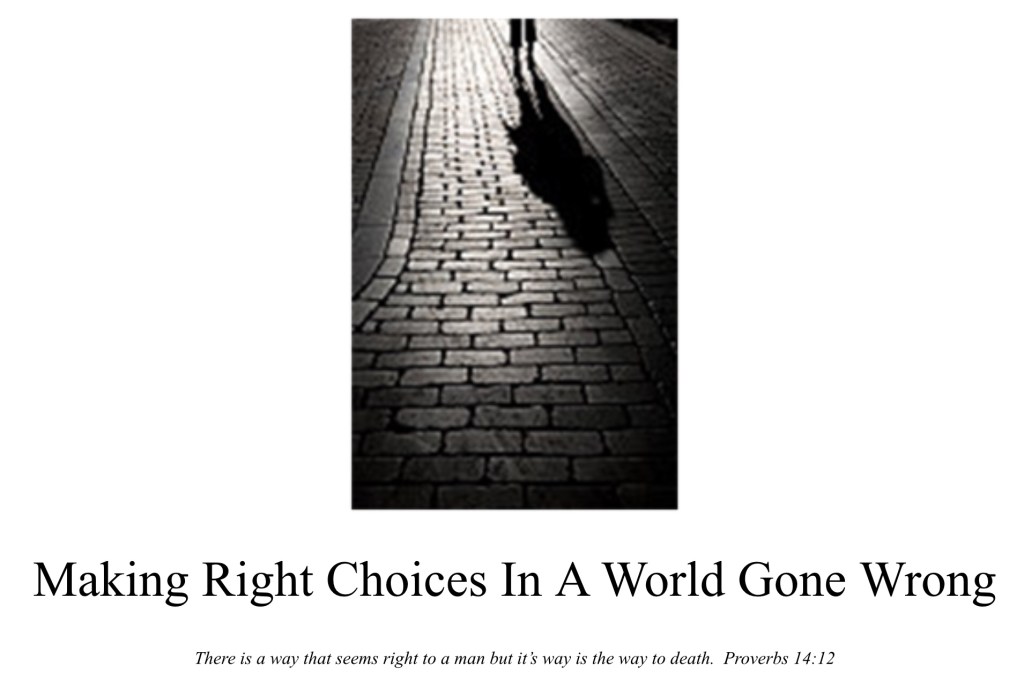
The Essence of Idolatry

“‘You thought that I was just like you; I will reprove you, and state the case in order before your eyes’” (Psalms 50:21).

Western society, with all its culture and scientific knowledge, is in the same satanic trap that governs the life of an aborigine bowing down to a rock. We all have our gods. Many worship the god of materialism—getting more stuff is their highest pursuit. Others worship the gods of sex or entertainment. Of course, behind all of this is the worship of self.

However, the essence of idolatry is possessing thoughts about God that are unworthy of Him. It may be creating a god, but it also may be making the true God into something He isn’t, or thinking something about God that is untrue.

Idolatry is more than worshiping some inanimate object; it is having an unworthy conception of God.

God said to the wicked in Psalm 50:21, “You thought that I was just like you.” That’s precisely what some have imagined about God. They have portrayed God after their own sinful mental image of Him. Careless Christians can do this also.

In The Knowledge of the Holy A. W. Tozer writes, “The history of mankind will probably show that no people has ever risen above its religion, and man’s spiritual history will positively demonstrate that no religion has ever been greater than its idea of God. Worship is pure or base as the worshiper entertains high or low thoughts of God. For this reason, the gravest question before the church is always God Himself, and the most portentous fact about any man is not what he at a given time may say or do, but what he in his deep heart conceives God to be like.”

As we learn about God this month, ask Him to remove misconceptions you may have about Him. Be diligent to learn what God says about Himself and not what you or others think He is like.

Suggestions for Prayer
• Praise God that He is the only God.
• Pray for forgiveness if you have been more committed to any other god or if you think thoughts about God that are unworthy of Him.

For Further Study
• The ancient Greeks had hundreds of gods. Just for good measure the Athenians built an altar to the unknown god. Read Acts 17:16-34. How did Paul approach those who worshiped false gods?
• How can you use Paul’s example as you witness to unbelievers today?

From Strength for Today by John MacArthur Copyright © 1997. Used by permission of Crossway Books, a division of Good News Publishers, Wheaton, IL 60187
ASTONISHED REVERENCE

In my own being, I could not exist very long as a Christian without the inner consciousness of the Presence and nearness of God! I can only keep right by keeping the fear of God on my soul and delighting in the fascinating rapture of worship. I am sorry that the powerful sense of godly fear is a missing quality in churches today.

The fear of God is that “astonished reverence” of which the saintly Faber wrote. I would say that it may grade anywhere from its basic element-the terror of the guilty soul before a holy God-to the fascinated rapture of the worshiping saint.

A true fear of God is a beautiful thing, for it is worship, it is love, it is veneration.

There are few unqualified things in our lives but I believe that the reverential fear of God, mixed with love and fascination and astonishment and adoration, is the most enjoyable state and the most purifying emotion the human soul can know. A true fear of God is a beautiful thing, for it is worship, it is love, it is veneration. It is a high moral happiness because God is!


A.W. Tozer

©2002-2021 SermonIndex.net

A Study on Discernment

[This is our final post for this series. I apologize for the lateness of the post, it was a very difficult one for me to write knowing there is a chance that it could offend some of you. Please know that is never my intent; my only intent is to enlighten, educate, and encourage you in God’s precious, holy Word.]

What’s Wrong With This Picture?

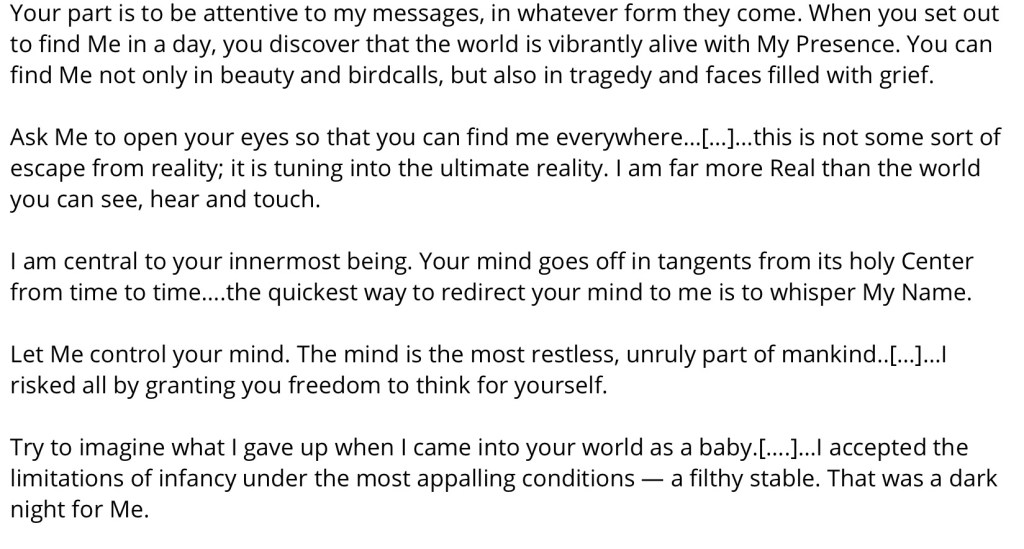
What was your answer? I hope you answered “it’s not scripture”. The image above is a compilation from the writings of Sarah Young. She is a highly popular and well known author among Christian women. I am sad to say she is only one of many, each with dozens of books, all filled with pretty, feel good, warm and fuzzy promises, all claiming their words are spoken by God Himself.

The problem? The words they write are their own words presented as God’s. I don’t deny that some of what they write sometimes reflects the nature of our loving God. At times these writers even throw in some scripture but most of the time it is scripture taken out of context, misapplied to fit whatever point the writer wants to make. That’s what makes their writings so dangerous.

Points to Ponder

  • Why do we rush to these books?
  • What makes them so appealing?
  • What is it that we are looking for?

Something to Think About

Remember a few days ago we looked at 2 Timothy 3:16-17? “All Scripture is inspired by God and profitable for teaching, for reproof, for correction, for training in righteousness; so that the man of God may be adequate, equipped for every good work”. You see, Paul is telling us that the Bible is inspired by God and is adequate – the Bible gives us all we need.

I would also ask that you consider the words of John in Revelation 22:18: “I testify to everyone who hears the words of the prophecy of this book: if anyone adds to them, God will add to him the plagues which are written in this book”. God has given these same warnings elsewhere in scripture. (See Deuteronomy 4:2, 12:32, Proverbs 30:6).

Final Thoughts

For the past month we have given our attention to the exhortations from God’s word for the necessity of discernment. As we end this series, I hope you don’t mind that I have offered up some specific cautions; some meat if you will, for you to chew on. It is my earnest hope and prayer that through this study you have grown in awareness and have come to realize the seriousness of our need for discernment; I know I have.

I have focused today’s lesson on the work of one writer. Let me say this. Outside of the Canon of Scripture, all writers, including and especially me, are human and as such are going to make mistakes. However, what I have presented to you today is not “human error”, it is a deliberate, self-serving pattern of false teaching and we are surrounded by it.

With all that said, it really doesn’t matter the motive or intent of the writer (or a speaker, counselor, or preacher for that matter) it is critical that we test EVERY WORD against Scripture.

May God richly bless you as you continuously search His Word for truth. To Him be all glory, honor, and praise.

©2022 Sandra Bivens Smith

A Study on Discernment

Decisions, Decisions

Our devotion today may feel a little different from what we’ve been doing these past few weeks. The following is from my own morning devotion time and I feel it is a fitting word for us as we draw to the close of our study on discernment.

This morning there is just one verse I would like us to consider.

For Christ also died for sins once for all, the just for the unjust, so that He might bring us to God, having been put to death in the flesh, but made alive in the spirit (1 Peter 3:18)

Points to Ponder

  • Sin and righteousness.
  • Just and unjust.
  • God’s throne and man’s throne.
  • Life and death.
  • Spirit and flesh.

Something to Think About

All these points are choices that every man and woman must make. We may not realize it but each choice is a decision for what master we will serve; the Lord of Light (John 1:4) or the prince of darkness (Ephesians 2:2).

Two thousand years ago Jesus made a choice. Had He not been willing, had He walked away from Calvary, which He could have chosen to do, (John 10:17-18) we would all be condemned to an eternity of sin, injustice, worldliness, the suffering of rotting flesh, and unyielding death. It is only because Jesus suffered in His flesh the evil things of this life that you and I have a choice at all.

As I consider each option I can’t help but wonder, why would anyone choose evil, injustice, worldliness, death, rotting flesh – eternity in hell – when they could enjoy the glory of serving a loving God? Why would anyone reject the gift of heaven that Christ’s sacrifice affords all who will accept? And yet, so many do. Could it be that they don’t know they have a choice? Is it possible that no one has told them that there is something better, something wonderful? Could it be no one has ever told them about Jesus?

©2022 Sandra Bivens Smith

A Study on Discernment

You Are What You Eat

In the 1920’s English nutritionist Victor Lindlahr said “Ninety percent of the diseases known to man are caused by cheap foodstuffs”. Just as what we put into our bodies determines our physical health, what we feed our minds determines our spiritual health.

Read Hebrews Chapter 5

Points to Ponder

  • We all have weaknesses
  • We are to deal gently and patiently with our weaker sisters who have been deceived
  • If we want to grow spiritually we must examine ourselves:
    • Am I content with only the fundamentals of the gospel?
    • Am I dull of hearing?
    • Am I living on milk or solid food?
  • Solid food (God’s Word) is required for discerning good and evil

Something to Think About

Paul wrote “When I was a child, I used to speak like a child, think like a child, reason like a child; when I became a man, I did away with childish things” (1 Corinthians 13:11). If we want to grow into mature, discerning Christians we have to put away our childish ways. We can’t eat candy for breakfast and expect to be healthy. We can’t just take the easy way, we must replace our childish notions with the truths – often hard truths – of God’s Word.

©2022 Sandra Bivens Smith

A Study on Discernment

Saying it Don’t Make it So

As a baby Christian I pretty much accepted any teaching that used the name of Christ. I loved going to Christian book stores believing that if a book was on their shelves it must be trustworthy. As I studied scripture and learned God’s word I came to understand that just because someone claimed they were writing “the gospel truth” didn’t make it true.

Read 2 Timothy 3:13-17

Points to Ponder

  • False teachers will continue to grow in influence
  • Only the Holy Scriptures give the wisdom thats lead to salvation
  • We must know the truth so that we can share the truth

Something to Think About

Paul warns Timothy about the false teachers that will seek to destroy the work of the gospel. He exhorts him to prepare himself to defend the gospel. And, he reminds him that Inspired Scripture is completely adequate for training us in our Christian faith, to help us grow in righteousness. We would be wise to take seriously and to follow the counsel Paul gave Timothy.

©2022 Sandra Bivens Smith

A Study on Discernment

True or False

“The dangers of buying counterfeit products aren’t always obvious,” notes U.S. Customs and Border Protection (CBP), which seizes all manner of such goods in its role as an agency of the U.S. Department of Homeland Security. “There are economic impacts, legal implications, and health and safety risks that are important for you to know before you buy.

(Newsweek Journalist Nancy Dunham , September 19, 2019).

The best way to fight back is to educate yourself.

(Money Talks News)

Read 1 John 4:1-6

Points to Ponder

  • Many false prophets are in the world
  • We must test all teaching to discern what is from God
  • True followers will recognize, listen to, and follow God’s word

Something to Think About

In Matthew 7:15 Jesus warns that false prophets are ravenous wolves disguised as sheep. In 2 Corinthians, Paul warns us that they come as apostles of Christ and that even Satan disguises himself as an angel of light. If we are to avoid being misled by false teachers and their deceptive teaching it is critical that we educate ourselves in God’s word.

© 2021 Sandra Bivens Smith

A Study on Discernment

Fake News

We hear a lot these days about fake news. It gets more and more difficult to know who or what to believe. My Daddy used to tell me “if you don’t see it with your own eyes or hear it with your own ears, don’t believe it”. Sadly, in this age of photoshop and dialogue editing, seeing and hearing is no guarantee that a thing is true.

Read

Matthew 24:3-8

Jeremiah 29:8-9

2 Peter 2:1-3

Points to Ponder

  • Discerning what is true is our responsibility
  • False teachers and prophets will claim to speak for Jesus
  • False teachers and prophets will even claim to be the Christ
  • Many will be misled by false prophets

Something to Think About

There is only one way we can confidently discern what is true, that is by KNOWING what is true. 1 Thessalonians 5:21 tells us to examine everything carefully, in 1 John 4 we are warned to test every spirit to see if it is from God. Paul exhorts us in Acts 20:27 to know “the whole counsel of God”, and in 2 Timothy 2:15 we are told to study God’s word so that we can rightly divide the word of truth.

©2012 Sandra Bivens Smith

A Study on Discernment

The Pain of Sin

I am sickened to the core of my soul when I hear someone claim their choices don’t hurt anyone.

  • The office friendship that becomes the after hours relationship.
  • The uncontrolled passion that becomes an unwanted pregnancy.
  • The temporary high that becomes a lifelong prison.
  • The alternate life style that becomes a death sentence.
  • The casual gossip or careless lie that becomes impossible for it’s victim to defend.
  • The……………………… that becomes…………. (fill in the blanks)

Read Isaiah 59

These events are often referred to as victimless crimes if indeed they are seen as wrong at all. After all, these things are all personal acts that don’t involve outside the situation. Nobody gets hurt. Really? What about the families that are torn apart, the babies that are murdered, the children abandoned and abused, the mothers and fathers whose hearts are broken, the reputations that are destroyed?

Points to Ponder

  • What are the consequences of sin identified in the Isaiah passage?
  • How does the LORD respond to these sins?
  • What is the promise the Lord we have?

Something to Think About

The attitude toward these types of “choices” sadden me and the cavalier attitude of our society disgusts me. If I, sinful woman that I am can be so affected, I can not begin to imagine how a holy God must feel. It’s impossible to fathom the sorrow Jesus must feel each time those he suffered and died for, through their acts of defiance and wickedness, laugh at the ridiculousness of the cross on which he died.

© 2012 Sandra Bivens Smith